A huge step forward in the evolution of perovskite solar cells recorded by researchers at City University of Hong Kong (CityU) will have significant implications for renewable energy development.
The CityU innovation paves the way for commercialising perovskite solar cells, bringing us closer to an energy-efficient future powered by sustainable sources.
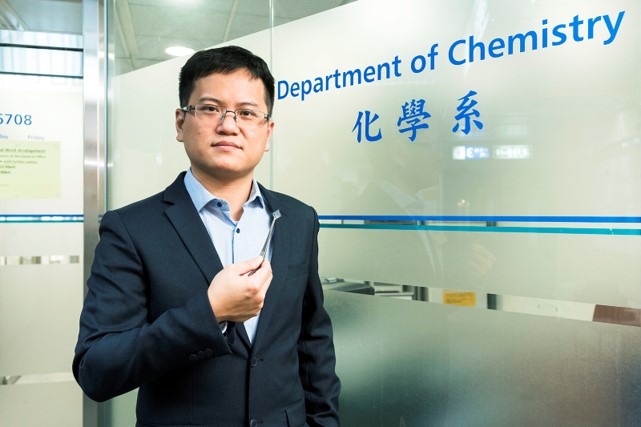
“The implications of this research are far-reaching, and its potential applications could revolutionise the solar energy industry,” said Professor Zonglong Zhu of the Department of Chemistry at CityU, who collaborated with Professor Zhong’an Li at Huazhong University of Science and Technology.
New approach
Perovskite solar cells are a promising frontier in the solar energy landscape, known for their impressive power conversion efficiency. However, they have one significant drawback: thermal instability, i.e. they don’t tend to perform well when exposed to high temperatures.
The team at CityU has engineered a unique type of self-assembled monolayer, or SAM for short, and anchored it on a nickel oxide surface as a charge extraction layer.

“Our approach has dramatically enhanced the thermal robustness of the cells,” said Professor Zhu, adding that thermal stability is a significant barrier to the commercial deployment of perovskite solar cells.
“By introducing a thermally robust charge extraction layer, our improved cells retain over 90% of their efficiency, boasting an impressive efficiency rate of 25.6%, even after operated under high temperatures, around (65℃) for over 1,000 hours. This is a milestone achievement,” said Professor Zhu.
The journal Science has reported the research as “Stabilized hole-selective layer for high-performance inverted p-i-n perovskite solar cells”.
Raising the heat shield
The motivation for this research was born from a specific challenge in the solar energy sector: the thermal instability of perovskite solar cells.
“Despite their high power conversion efficiency, these solar cells are like a sports car that runs exceptionally well in cool weather but tends to overheat and underperform on a hot day. This was a significant roadblock preventing their widespread use,” said Professor Zhu.
The CityU team has focused on the self-assembled monolayer (SAM), an essential part of these cells, and envisioned it as a heat-sensitive shield that needed reinforcement.
“We discovered that high-temperature exposure can cause the chemical bonds within SAM molecules to fracture, negatively impacting device performance . So our solution was akin to adding a heat-resistant armour - a layer of nickel oxide nanoparticles, topped by a SAM, achieved through an integration of various experimental approaches and theoretical calculations,” Professor Zhu said.
To counteract this issue, the CityU team introduced an innovative solution: anchoring the SAM onto an inherently stable nickel oxide surface, thereby enhancing the SAM's binding energy on the substrate. Also, they synthesised a new SAM molecule of their own, creating an innovative molecule that promotes more efficient charge extraction in perovskite devices.

Better efficiency in higher temperatures

The primary outcome of the research is the potential transformation of the solar energy landscape. By improving the thermal stability of perovskite solar cells through the innovatively designed SAMs, the team has laid the foundation for these cells to perform efficiently even in high-temperature conditions.
“This breakthrough is pivotal as it addresses a major obstacle that previously impeded wider adoption of perovskite solar cells. Our findings could significantly broaden the utilisation of these cells, pushing their application boundaries to environments and climates where high temperatures were a deterrent,” said Professor Zhu.
The importance of these findings cannot be overstated. By bolstering the commercial viability of perovskite solar cells, CityU is not merely introducing a new player in the renewable energy market, it’s setting the stage for a potential game-changer that could play a vital role in the global shift towards sustainable and energy-efficient sources.
“This technology, once fully commercialised, could help decrease our dependence on fossil fuels and contribute substantially to combating the global climate crisis,” he added.

This research article originated from CityU Research Stories.