


Women and Literati in Chinese History Tell Many Stories
Chinese and history scholars at CityU led teachers to explore Chinese history from different angles through a series of talks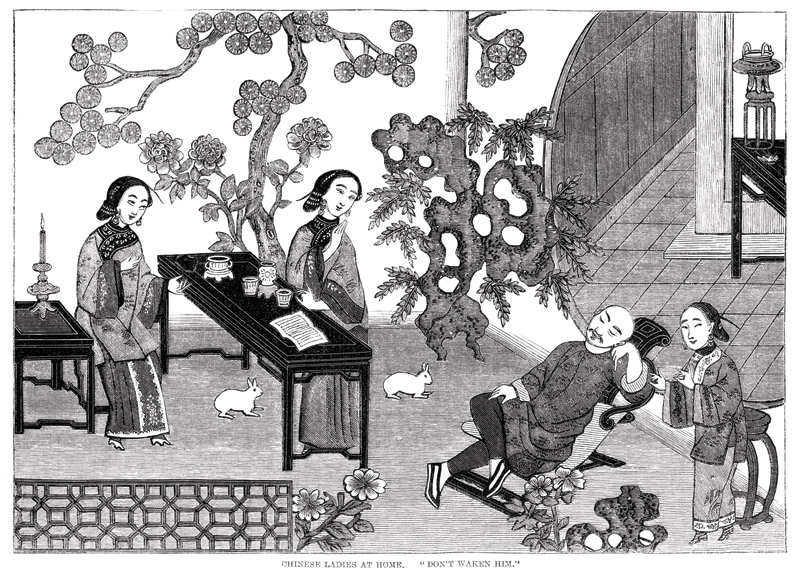
Women in ancient and imperial China generally lived hard lives.
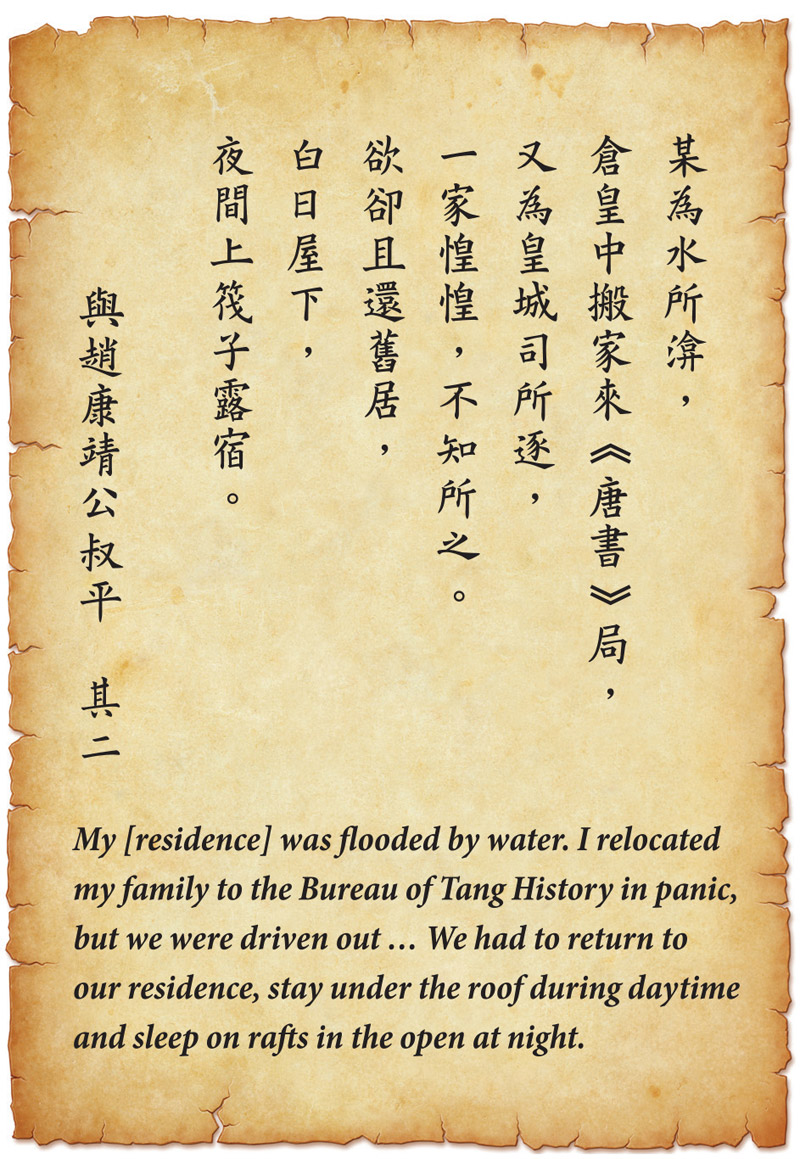
Ouyang Xiu described how he struggled during serious floods in letters and writings.
The teaching and learning of Chinese history focus mainly on dynasty transitions and incidents like palace power struggles, military coups and social unrests. Students may be able to name famous historical figures like the Hongwu Emperor Zhu Yuanzhang, Genghis Khan, and Empress Dowager Cixi, and tell how they were involved in those events. However, as textbooks usually lack multi-faceted depictions of these figures, let alone mentions of less famous people, the subject is not always attractive to all students.
To offer a new—and more human—perspective on Chinese history to secondary school teachers, CityU’s Department of Chinese and History (CAH) and the Personal, Social and Humanities Education Section of HKSAR’s Education Bureau co-organised a series of two talks in early December 2020 with the support of the Tin Ka Ping Foundation. The first introduced the life experiences of Song literati, while the second discussed the plight of the women of the Yuan, Ming and Qing dynasties.
A Glimpse of Life from the Writings of Literati
Dr TSUI Lik-hang began the first talk by guiding the audience through numerous academic studies that portrayed the Song dynasty as an era of prosperity. A book by the late historian Philip D CURTIN reads, “between…960 and…1127, China passed through a phase of economic growth that was unprecedented.” Economic historian Mark ELVIN also remarked that China at this time was “the most urbanised society in the world”.
The talk then turned to its most absorbing part, when Tsui shared what he discovered while investigating the informal letters and poems written by scholar-official OUYANG Xiu between 1054 to 1067. During this period, he held senior posts in the imperial capital city of Kaifeng and should have led a well-off life. However, complaints about the city are extensively found in his letters and poems.
For example, Ouyang wrote a letter in 1056 recounting his unfortunate experience during a serious flood: “My [residence] was flooded by water. I relocated my family to the Bureau of Tang History in panic, but we were driven out. We had to return to our residence, stay under the roof during daytime and sleep on rafts in the open at night.” In other letters and poems, he reported several incidents of floods that trapped him in his leaking house, and the challenging conditions he faced in other weather hazards such as heavy snow and heatwaves.
Apart from natural disasters, Ouyang also wrote extensively about facing difficulties in obtaining good medical care in the imperial capital. In a letter to his close friend MEI Yaochen, he asked for help because his mother had been ill for some time. An epitaph for Mei, who probably died of an epidemic disease, suggested that misdiagnosis by incompetent physicians was the cause.
Tsui drew the teachers’ attention to the fact that Ouyang’s writings only described his own circumstances, and if a top official like him encountered hardships, one could imagine how other residents struggled in the rapid developing city. He also added that studying the daily lives of historical figures could offer rich perspectives to the teaching and learning of Chinese history.
Status of Women Reflected through Marriage Traditions and the Cult of Chastity
The second talk, hosted by Dr LO Kar-kee, was introduced by an epitaph written by Qing poet YUAN Ji, who was faithful to her husband even though she faced abuse by him. From her expression of grief, and taking into account the marriage traditions, cult of chastity, laws and economic situation of the Yuan, Ming and Qing dynasties, Lo revealed the plight of women in Chinese history to the audience. The Yuan dynasty was under the rule of the Mongols but certain Han practices were retained. Marriage customs of the Han Chinese, for example, were still observed, but there were tinges of the characteristics of the Yuan governance. For example, the Mongol practice of levirate marriage, which allowed a man to marry the wife of his deceased brother, was permitted. Laws promoting chastity among Han widows were introduced, although remarriage was still common. Starting from the Yuan dynasty, women had to forfeit their property should they leave their first marriage.
During the Ming dynasty, neo-Confucianism became prominent, and the status of “chaste widows” was elevated. The Ming authority honoured these women in official edicts and by the construction of chastity arches to commemorate them. Women who died resisting rape, or who committed suicide after their husband’s death, were referred to as “fierce women”. Yet, heresy against neo-Confucianism, and ideas depicting sympathy and compassion for women, were also prevalent.
Entering the Qing dynasty, chastity among women was further promoted and encouraged via legal measures. Shelters were built to protect widows from being forced to remarry, allowing them to live a life of “virtuous chastity”.
The talk ended with an overview of the economic boom during the Ming and Qing dynasties, during which some women gained power within their families and were able to travel with their fathers or husbands. However, the overall plight of women still left a lot to be desired.
Knowledge Exchange Continues in Time of Social Distancing
The talks, which were delivered online due to the pandemic, were well received, with a total of over 300 teachers participating. The speakers were pleased with the turnout, and hoped the views shared would inspire the attendees to view Chinese history differently, which would also help in their pedagogy development.