Highly novel insights into the complex social lives of feral cattle
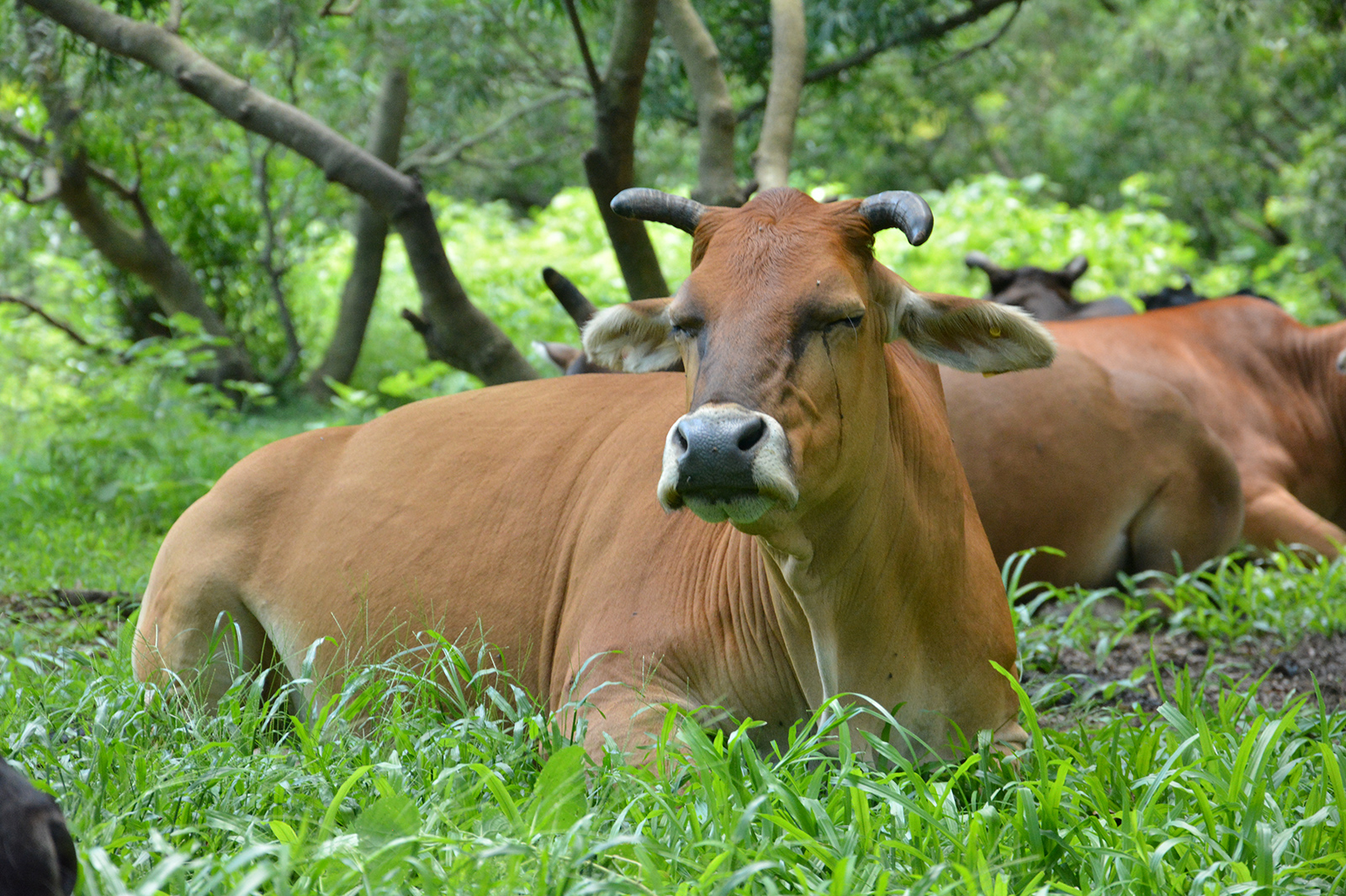
Unique insights into the social lives of cattle revealed in a new study by scientists at City University of Hong Kong (CityUHK) can enhance our understanding of animal behaviour and welfare. The study suggests that sex and social status influence social grooming (where one animal licks another, also known as allogrooming) among free-ranging feral cattle in Hong Kong.
The CityUHK researchers found that feral cattle performed preferential grooming of certain individuals and, in particular, that more dominant females received more grooming. This asymmetrical distribution of licking also applied to whom male cattle decided to lick, according to the study published in Animal Behaviour.
The research is led by Professor Alan McElligott, Associate Professor, and PhD researcher George M. W. Hodgson, in the Department of Infectious Diseases and Public Health in the Jockey Club College of Veterinary Medicine and Life Sciences (JCC) at CityUHK. Other team members include Professor Kate J. Flay, Assistant Professor, Tania A. Perroux, PhD researcher, both in the Department of Veterinary Clinical Sciences, and Dr Chan Wai-yan, a JCC veterinary school graduate.
While over a billion cattle are used in production globally, free-ranging feral cattle are relatively unique in Hong Kong, with approximately 900 brown cattle across the region.
“Most research on cattle behaviours is conducted on farms, and so the opportunity to study cattle behaviour in free-ranging groups is rare, as there are only a few feral populations worldwide,” said Professor McElligott, adding that studying feral cattle social behaviours will aid our understanding of how and why these kinds of friendly behaviours have evolved.
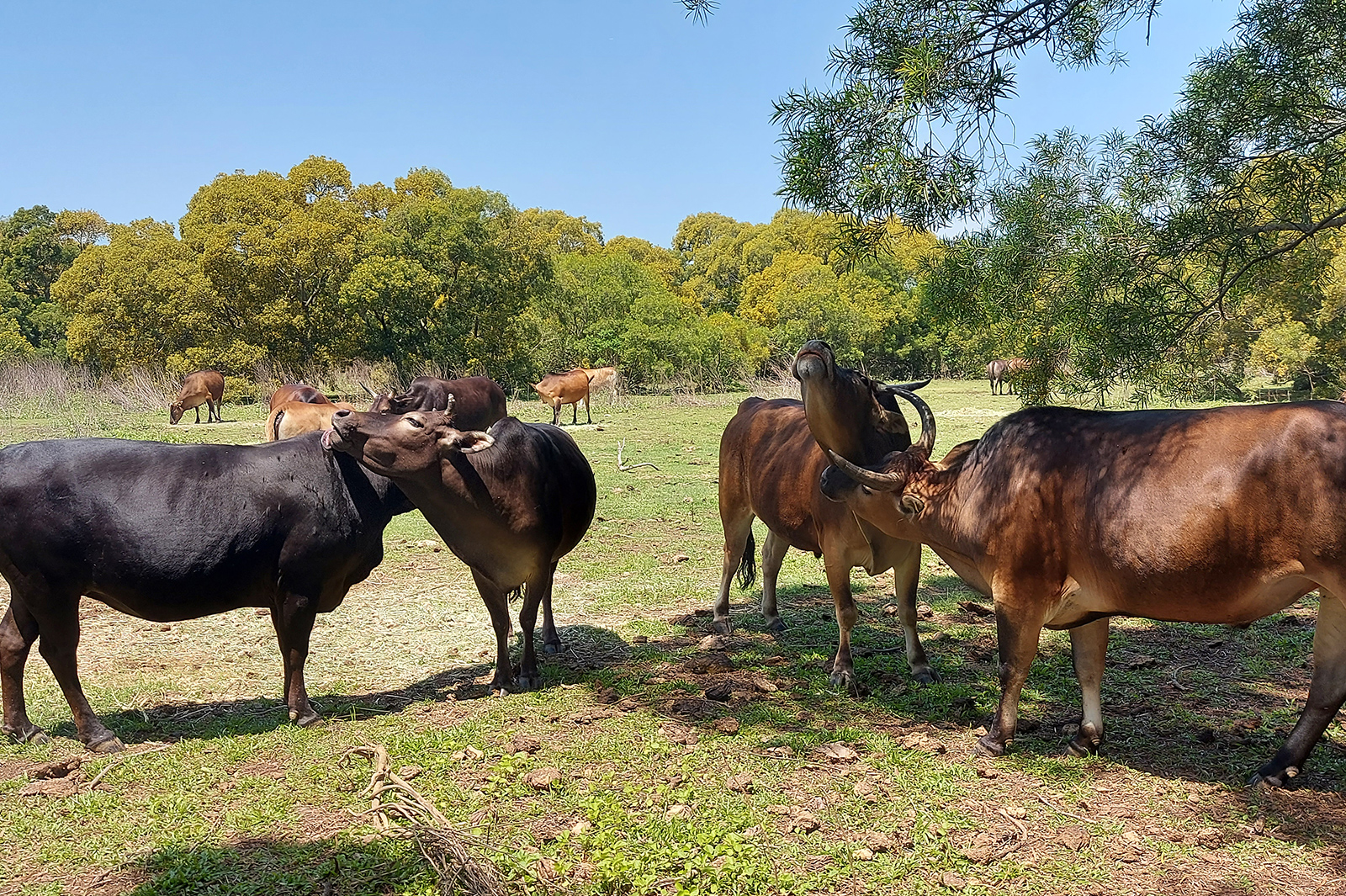
The research team conducted observations from February to May 2022 on a mixed-sex cattle herd in Sai Kung East Country Park and collected data from 47 to 56 cattle per observation day.
The team found that all individuals received allogrooming but that not all individuals performed allogrooming. Males performed allogrooming more towards females than other males, but females groomed both sexes equally, suggesting a sex-specific aspect to cattle behaviour that is not usually evident when studying the species on farms.
Although higher-ranking females (i.e., more dominant animals) received more allogrooming from other individuals than subordinates, no such pattern was found for males. The team also found that high-ranking animals exchanged more friendly grooming between themselves, suggesting that high-ranking females are more attractive as social partners.
“This suggests that grooming isn’t directed to higher-ranking animals for exchanging rank-related benefits, as has been found in primates, but rather is used to strengthen social bonds and promote affiliation within the group,” said Hodgson.
The team also found that the neck and head were the most commonly groomed regions for the cattle, whereas fewer allogrooming events were performed on the legs and belly.
“Social behaviours such as grooming or dominance are crucial in developing and maintaining herd relationships for farmed and feral cattle,” said Professor Flay. "These preferential interactions are important to understand, as they can affect cattle and other ruminants’ health, such as parasite burdens and infectious disease transmission.”
The takeaway from the study is that these preferential allogrooming patterns improve our knowledge of sex-specific interactions and help us to understand the dynamics of agonistic and affiliative behaviours in multi-male, multi-female, ungulate groups.
“These results are essential for understanding patterns of positive social relationships and what good welfare means for cattle, especially when they are free to choose with whom to interact,” said Professor McElligott.