百家乐怎么玩-澳门百家乐官网娱乐城网址_网上百家乐是不是真的_全讯网888 (中国)·官方网站

The impact of Chinese culture on Islam

Wang Feng
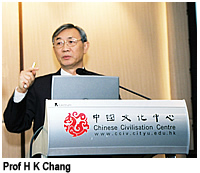
 

Professor H K Chang, CityU President, shared his observations on the impact of traditional Chinese culture on Islam with more than 100 staff and students at the Chinese Civilization Center (CCIV) on 2 November. “Being a Chair Professor, I see it as my duty to give lectures and share my knowledge with students,” said Professor Chang, who just returned from Korea where he gave a talk entitled “Ideal biomedical engineers in the 21st century”.


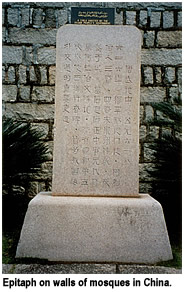
In the two-hour CCIV lecture, Professor Chang introduced the history of Chinese Islam, and analyzed the impact of Chinese traditional culture, Confucianism, and Buddhism on Islam through observation of the epitaphs and writings on the walls of mosques in China. To pique the interest of the students in the audience, Professor Chang told two historical stories about how Muslisms in northwestern China became one of the minority groups of today's capital city of the Kyrgyz Republic, and about how the descendants of the Philippines' Sulu King migrated to China.


Broadening horizons


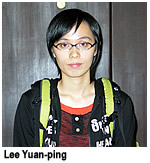
“I just could’t imagine how Islam and Chinese culture could coexist. To satisfy my curiosity, I attended President Chang’s lecture and learned more about how Chinese culture influenced Islam and vice versa,” said Lee Yuan-ping, a second-year student in the Department of Physics and Materials Science (AP). “I feel encouraged by Professor Chang to broaden my horizons and learn more beyond my own discipline.”

 

“Learning about how Islam merges with Chinese culture, I began to reflect on how much I really know about my religion, Christianity. Professor Chang's lecture inspired me to think about my identity. He encourages me to be more curious about what I  come across,” said David Lue Yat-fung, a second-year student in the Department of English and Communication.


Arousing interest in cross-cultural studies
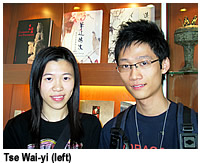
 

“I admire Professor Chang's inquisitiveness about areas beyond his own discipline,”  first-year AP student Tse Wai-yi said. “I will start exploring traditional Chinese culture before moving on to other cultures.”


CCIV Chair Professor Zhang Guangda, moderator of the lecture, was impressed by President Chang’s vision of education and his interest in cultural topics, albeit his educational background is biomedical engineering. “Professor Chang is a positive role model for broadening one's knowledge base and cross-cultural awareness,” he said.
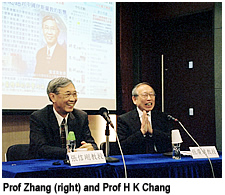
A well-known Sinology scholar, Professor Zhang focuses his research on the relationship between the Sui Dynasty, Tang Dynasty, Five Kingdoms and western countries, as well as cultural exchanges between China and Iran, and other western Asian countries during the South and North Kingdom and the early Yuan Dynasty. “President Chang’s introduction of the historical development of Islam in China was comprehensive and very well structured, with substantial evidence,” he said, suggesting that Professor Chang write a book about his observations.


Reflecting the feudality of Chinese society
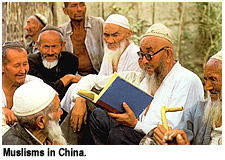
Chinese Muslim exemplify the fusion of two great cultural systems in the medieval world—Arabian-Islam and Chinese. Different factions of Chinese Islam accepted ethics of Confucianism while some were influenced by Buddhism and Taoism; their administrative systems also reflected the feudal and authoritarian characteristics that were predominant in Chinese society. In the 16th century, a Chinese Muslim, Hu Dengzhou, founder of mosque education incorporated Islamic teachings into the “SiShu” (private schooling) through which Chinese Muslims learned about Islamic doctrines and were also taught Arabic and Chinese, facilitating the spread of Islam generations after generations.


According to President Chang, “Xi Dao Tang” (Western Faith Church) founded in 1901 by Ma Qixi, a descendant of an Islamic family in Gansu, was a Chinese Muslim Society based on the combination of Islam, Sinology, and Utopianism. Today, Xi Dao Tang, which advocates common ownership and equal distribution of property, has more than 10,000 followers.


Respect and tolerance

Since the 16th century, the Chinese translation of Islamic literature incorporated the teachings and language of neo-Confucianism and encouraged Muslism to live by Confucianism, and spread Islam through Confucianism. "This exemplified Islam's proactiveness in adapting to Chinese society," Professor Chang said.


He concluded the lecture by stating that two factors contributed to the development of Islam in China. While the tolerance of Chinese society towards minorities and their religions fostered the advancement of Islam, the receptive nature of Islam enabled it to adapt to Chinese culture while retaining its core values.


David Lue contributed to this story.

YOU MAY BE INTERESTED

Contact Information

Communications and Institutional Research Office

Back to top
百家乐官网赌场赌场网站| 百家乐首页红利| 聚龍社百家乐官网的玩法技巧和规则 | 伟德百家乐官网下载| 百家乐玩法说| 澳门百家乐下注最低| 钱柜百家乐官网的玩法技巧和规则 | 全讯网信息| 24山向吉凶山运| 澳门百家乐官网真人娱乐场| 大发娱乐场官方下载| 大发888游戏平台403| 大发888破解| 大发888娱乐城打发888打发8| 全讯网新3| 百家乐官网平台注册送彩金| 百家乐官网楼梯缆| bet365合作计划| 棋牌论坛| 88娱乐城天上人间| 百家乐官网无敌直缆| 百家乐官网从哪而来| 玩百家乐官网游戏的最高技巧| 至尊百家乐官网2014| 百家乐官网2号机器投注技巧| 网上百家乐官网| 百家乐官网长庄投注| 百家乐官网真人视频出售| 网上百家乐官网作弊法| 太子百家乐官网的玩法技巧和规则 | 一直对百家乐官网很感兴趣.zibo太阳城娱乐城 | 多台百家乐的玩法技巧和规则| 银河百家乐的玩法技巧和规则 | 大发888线上娱乐21点| 大发8888娱乐城| 大发888官网e世博官方网站| 英伦国际| 乐百家百家乐官网游戏| 尊龙百家乐官网娱乐场| 聚众玩百家乐官网的玩法技巧和规则 | 澳门百家乐官网单注下|