


Sustainability as the “New Black”: Transforming the Language of Marketing
As consumers make eco-conscious purchasing decisions and shareholders monitor environmental, social and governance (ESG) practices, Professor Esterina NERVINO believes it is vital that students interested in sustainability professions can communicate the new discourse to them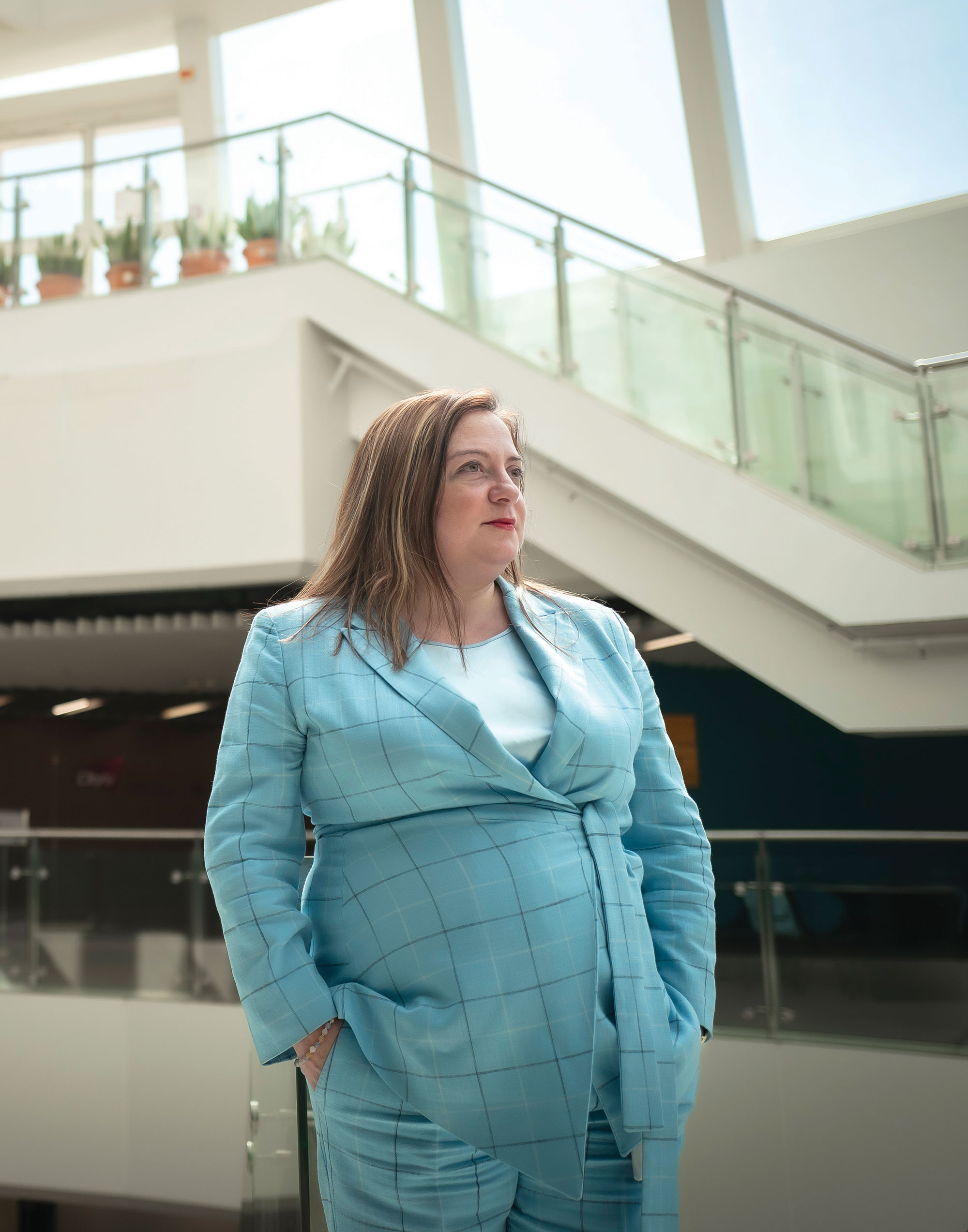
Nervino says these days luxury brands seek to emphasise their ESG commitments and going from “gold” to “green”.
Long considered opposing forces, sustainability and luxury have begun to converge driven by a growing awareness of the planet’s finite resources and the urgent need for responsible consumption. As environmental consciousness continues to gain momentum amongst consumers, luxury brands are having to reimagine traditional notions of opulence and revisit the importance of transparency and traceability and the role of conscious consumer choices in shaping the future of luxury.
Accordingly, Professor Esterina NERVINO has taken a joint appointment as Assistant Professor with the Department of English and the Department of Marketing at City University of Hong Kong (CityUHK) to carry out research into these growing areas of concern and the importance of effective communication in sustainability.
Originally from Italy, Nervino feels that she is no stranger to luxury, having been born into a small town coincidentally called Diamante, the Italian word for ‘diamond’, synonymous with the world of luxury. Having more than 11 years’ experience in the academic and private sector combined, she has been studying how language and the use of images, colours, camera angle, and other semiotic resources shape the concept of luxury.
Especially in what she calls a new age of luxury, social media communication has been shaping consumer demand and driving a transformation in luxury. From the conventional definition and understanding of conspicuous consumption, social stratification and signalling, it has now evolved to conscious consumption, social equality and perhaps, importantly, sustainability.
Nervino says today’s luxury discourse is about the brand’s ESG commitments, efforts, achievements and going from “gold” to “green”.
Crafting Sustainable Brand Narratives
Indeed, her research into luxury communications shows that now more than ever, there is a growing need for authentic and engaging narratives that go beyond just addressing environmental considerations. She argues that there must be various communication strategies and best practices for conveying sustainability efforts to consumers. And there is also great danger in using loose language such as “eco-friendly” that can take brands down the slippery slope of greenwashing—when the PR and marketing of a product deceives the public into thinking an organisation’s products, aims and policies are environmentally friendly, when they may not be.
Besides seminars and workshops with companies across different sectors, “many of my engagement activities target the general public and students to shed light on how communication can manipulate some perceptions,” she says. To this end, Nervino is excited to be part of plans to bring this conversation into the classroom.
She designed a new course, launching next academic year, titled “The Language of Sustainability” at CityUHK, that will focus on sustainability communication through narrative and rhetorical conventions, and look at how language, images, colours, and the use of other semiotic resources influence the perceptions of sustainability messaging in communications across different channels.
Explaining that her role at CityUHK would be spread across the departments of two different colleges, Nervino says she hopes to create synergies between the two areas.
“Since my research areas mainly fall into Language for Specific Purposes and professional communication, basically I am examining how language is used in different domains,” she says.
There is no need to treat marketing around sustainability as a competitive advantage. Instead, you need to integrate it into the business
Professor Esterina Nervino
Turning to luxury as a specific example, Nervino observes how luxury communication and marketing have changed. Describing sustainability as the “new black”, she says that the whole industry has undergone a transformation driven by consumer concerns, corporate pressure, risk for reputational and financial damage, and regulations in certain regions. For this reason, luxury and sustainability can no longer be mutually exclusive—in fact, luxury brands need to look at themselves from a new perspective and ensure that they can pave the way in sustainability innovation, changing their business models while embracing artisanal work and craftsmanship as essential marketing messages.
“So brands now shouldn’t be using sustainability as a marketing tool, we are not in that era anymore,” she says. Instead, Nervino advocates using evidence-based storytelling to avoid the abuse of the term “sustainability”.
“Storytelling, I think, is basically the main tool for luxury. What makes brands stand out is by telling a story that creates the collective imagery,” she adds.
She notes that some brands are already making moves in that direction with LVMH being one of the brands that has acquired a production house in France solely to shift its communication towards entertainment.
Brand Transparency Matters
“Students interested in sustainability professionals need to know how to communicate about it, whether you’re an engineer or someone in business or communication, we all need to be aware of the power of narratives,” she says, adding that the new course will therefore have very specific learning outcomes.
She then elaborates that there is now a concrete shift towards more scientific approach to sustainability communication. As such, the new norm requires that clear texts are used for all communication.
In fact, Nervino sees this as a real opportunity for brands to utilise quiet sustainability to deliver their communications while not compromising on their product.
“There is no need to treat marketing around sustainability as a competitive advantage, instead you need to integrate it into the business,” she says. “The role of brands today can be used to influence and educate consumers and influence their behaviour.”
“I’m not asking companies to change their products as this would inevitably impact their business, but just to rethink their business models and communicate honestly about what they are doing”, she says, adding that it is more about using the brand’s influence to show their peers and consumers what they are doing and sharing best practices.
“Ultimately, it is about being aware of the importance of the words used in advertisements that can be decoded and have an influence on themselves as consumers,” she says.