
- 1A-402, 4/F, Block 1, To Yuen Building
- +852 3442-8639
- +852 3442-0128
- alan.fung@cityu.edu.hk
- CityU Scholars
- Lab Website
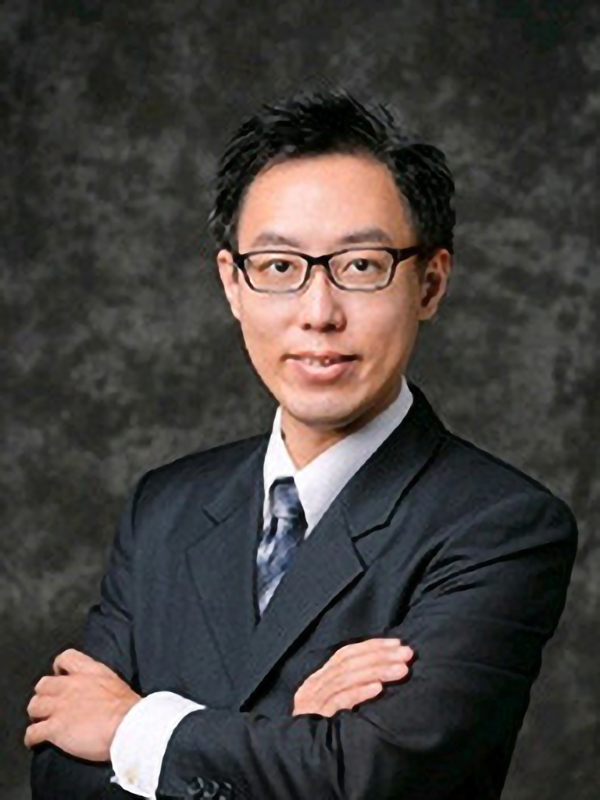
Prof. Alan Chi Chung Fung obtained his PhD degree in Physics from the Hong Kong University of Science and Technology (HKUST) in 2013. In 2015–2019, he served as a research scientist at the RIKEN Centre of Brain Science (CBS). After that, he worked as a staff scientist at the Okinawa Institute of Science and Technology Graduate University (OIST) until January 2022. In late February 2022, he joined the City University of Hong Kong.
Research Contribution
Alan started his research on continuous-attractor neural network (CANN) models in 2006. He has jointly discovered the intrinsic dynamics of CANN under the influence of dynamical synapses (Fung, Wong & Wu, 2010; Fung et al., 2012). After that, he has jointly proposed the anticipatory behavior observed in CANN. The anticipatory behavior can explain how the head-direction (HD) cells in the rat anterior thalamic nucleus (ATN) encode future head directions (Fung, Wong & Wu, 2012). Recently, Alan found that the CANN with short-term depression can address the discrete-attractor-like behavior observed in the hippocampus during periods of non-rapid-eye-movement sleep (Fung & Fukai, 2019).
Besides CANN, Alan has also contributed other modeling works to address phenomena observed in experiments. In 2016, Alan jointly proposed a mathematical model to explain the integration of saccadic motion and visual signal (Wang et al., 2016). In 2019, Alan jointly contributed an algorithm based on adult neurogenesis observed in the dentate gyrus to perform pattern separation. The algorithm can be a potential machine learning algorithm for future usage. In 2021, Alan supplied a series of predictions on long-term synaptic plasticity due to neurotransmitter release probability distribution modulated by the suppression of NMDA astrocytic receptors (Chipman et al., 2021). The further implication is still under investigation.
Research Interest
Alan’s current research interests include
(1) mathematical models for neural phenomena,
(2) neuroscience-inspired algorithms, and
(3) analyzing neural data.
Mathematical models enable scientists to explore broader conditions of neural phenomena and potential implications. By developing algorithms based on neural phenomena, one may retrieve the corresponding functional meaning in information processing. On the other hand, it will be interesting to see how modern data science skills may unveil discoveries from existing neural data.
Review
Continuous Attractor Neural Networks: Candidate of a Canonical Model for Neural Information Representation
Si Wu, K. Y. Michael Wong, C. C. Alan Fung, Yuanyuan Mi, Wenhao Zhang
F1000Research 5 (F1000 Faculty Rev) 156 (2016)
Position Available
We are looking for PhD students and research assistants (RAs) to join our team. Ideal candidates should have a background in either Neuroscience or quantitative science and be interested in Computational Neuroscience. Interested candidates, please get in touch with alan.fung@cityu.edu.hk.
Selected Publications
- C. C. Alan Fung and T. Fukai (2023). Competition on presynaptic resources enhances the discrimination of interfering memories. PNAS Nexus 2(6) pgad161 (2023).
- P. H. Chipman, C. C. A. Fung, A. P. Fernandez, A. Sawant, A. Tedoldi, A. Kawai, S. G. Gautam, M. Kurosawa, M. Abe, K. Sakimura, T. Fukai, Y. Goda (2021). Astrocyte GluN2C NMDA receptors control basal synaptic strengths of hippocampal CA1 pyramidal neurons in the stratum radiatum. eLife 10 e70818 (2021)
- K. Ghandour#, N. Ohkawa#, C. C. A. Fung#, H. Asai, Y. Saitoh, T. Takekawa, R. Okubo-Suzuki, S. Soya, H. Nishizono, M. Matsuo, M. Osanai, M. Sato, M. Ohkura, J. Nakai, Y. Hayashi, T. Sakurai, T. Kitamura, T. Fukai and K. Inokuchi (2019). Orchestrated ensemble activities constitute a hippocampal memory engram. Nature Communications 10 2637 (2019)
#Equal contribution - C. C. A. Fung and T. Fukai (2019). Discrete-attractor-like tracking in continuous attractor neural networks. Physical Review Letters 122 018102
- Xiaolan Wang#, C. C. Alan Fung#, Shaobo Guan, Si Wu, Michael E. Goldberg and Mingsha Zhang (2016). Perisaccadic receptive field expansion in the lateral intraparietal area. Neuron 90(2) 400-409
#Co-First authors - C. C. Alan Fung, K. Y. Michael Wong, Hongzi Mao and Si Wu (2015). Fluctuation-response Relation Unifies Dynamical Behaviors in Neural Fields. Physical Review E 92(2) 022801
- C. C. Alan Fung, K. Y. Michael Wong and Si Wu (2012). Delay Compensation with Dynamical Synapses. Advances in Neural Information Processing Systems (NIPS) 25
The full list of publications can be found at http://personal.cityu.edu.hk/chicfung9/publications.html.
23 September 2023