Facebook
 Instagram
 X
X LinkedIn
 Weibo
Weibo WeChat
 YouTube
 RedNote
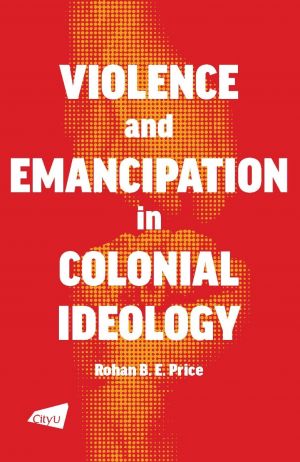
The genesis of this book was in a series of conversations I had at Shandong University (Weihai) with Professor Jiang Ming of the law school there. An eminent sociologist, and the son of a re-educated Kuomintang railway man, he expounded on a remarkable idea. In breaks between table-tennis rallies, he demonstrated that China would have made it to modernity without Western help. The Kuomintang government would have cleaned up its notorious corruption. The bounties of imperial examination, customs duty, and tribute would have been pluralized. Less well-known veins of Confucianism would have been politically deployed to describe a harmonious relationship of the state to its citizens through respect for intellectuals, including scientists. Fiscally disciplined and developmental in outlook, modern China would have been born. Unless for its internecine squabbling, modern China — fiscally disciplined and developmental in outlook — would trace its birth to 1912 and see its infancy over the 1930s. And all without industrialization.
Jiang’s view was speculative in a vein that Marxists truly hate. But it did not quite feel like “what if” history. He maintained that China had been steadily gathering the ingredients for a great prudential republic even after the West intervened in its affairs decisively to make it dependent on opium in 1841. It would not be a democracy in the Westminster vein or especially controlled by an aggressively accumulative industrial base in the vein of, say, the Teutonic type. It would be a republic of railways and filial workshops, with a central government radiating its civic spokes outwards to secure, with reason, conflicting impulses of ethnicity and religion in a fixed orbit around the Nanjing metropole. By building flood levies and rolling out telegraph lines, it would earn a reputation for measured benevolence. The ascent of Sun Yat-sen to the provisional presidency in 1912 augured many of these things. He was a Christian, a man of science, who was devoted to the overthrow of the feudal imperial family and the modernization of government by opening up political opportunity.
Postcolonial historians have a couple of options in how they view the Far Eastern past. Needless to say, the self-governing Chinese republic of railways is not prominent among them. Neither has China been seen as a tightly contested semi-colonial space. Best aligned to the tenor of this work, has been the new retrospective school led by Chibber which has questioned why industrialization failed in India compared to other places in North East Asia and answered it by pointing to discord between objectives of state developmentalists and local capitalists. The radical positivist school led by Stoler contains no developmental argument. It has subjectively viewed the colonial world as a loose collection of inferior places with colonial rulers given to administrative anxiety about indigenous nationalism and inter-racialism. These were to be negated with bouts of racist violence, frogmarching or co-option, if that seemed to work better. To the old structural school, overseen by the likes of Hobsbawm, colonies were extrusions of bottled up European capital. They were merely supplicant syndications of British nationalism. Enriching the metropole via involuntary consumer trade, or slave labour for manufacturing, colonies were garrisoned replications of mother country social class whether under palm or pine. Colonies progressed their development agendas according to metropolitan, not local, needs.
Reading Colonies—Property and Control of the British Far East
Author / Editor
R.B.E. Price
HKD208.00
In stock
By 1945, everywhere one looked in the Far East the British Empire was being openly questioned or was failing outright. Yet in the previous century, the British had been the pre-eminent imperial power from Weihaiwei to North Borneo.
Reading Colonies: Property and Control of the British Far East investigates how the British held on for so long. Rent control legislation, and other measures of property law such as land improvement opportunities, are nominated as key tools used to frustrate decolonization in most Eastern colonies. British colonial administrations tried long and hard to inhibit the dialectical discord between their colonial hierarchism and local forms of nationalism with the prompts and plaudits of property policy. In cases where indigenous landlordism masqueraded as patriotism, independence came quickly (Ceylon and Burma). Where public housing established itself as a key post-war plank of social policy, freedom from British rule was a more gradual affair (British Malaya and Hong Kong).
This study concludes that British colonial regimes did not offer a share of their industrial modernity to stay at the apex of political power, but readily adjusted old-style landlordism to keep nationalist usurpers at bay.
Reading Colonies: Property and Control of the British Far East investigates how the British held on for so long. Rent control legislation, and other measures of property law such as land improvement opportunities, are nominated as key tools used to frustrate decolonization in most Eastern colonies. British colonial administrations tried long and hard to inhibit the dialectical discord between their colonial hierarchism and local forms of nationalism with the prompts and plaudits of property policy. In cases where indigenous landlordism masqueraded as patriotism, independence came quickly (Ceylon and Burma). Where public housing established itself as a key post-war plank of social policy, freedom from British rule was a more gradual affair (British Malaya and Hong Kong).
This study concludes that British colonial regimes did not offer a share of their industrial modernity to stay at the apex of political power, but readily adjusted old-style landlordism to keep nationalist usurpers at bay.
ISBN
978-962-937-297-2
Pub. Date
Dec 1, 2016
Weight
0.45kg
Paperback
248 pages
Dimension
140 x
241 mm
Subjects
Chapter 1 The Limits of Theory
Chapter 2 Reading Colonies via Property Policy
Chapter 3 Judicial Autonomy and Post-War Rent Control
Chapter 4 Property as Anti-Nationalism or Failing Geopolitics
Chapter 5 Reading Capital, Reading Colonies
Chapter 6 Codas
Related Titles